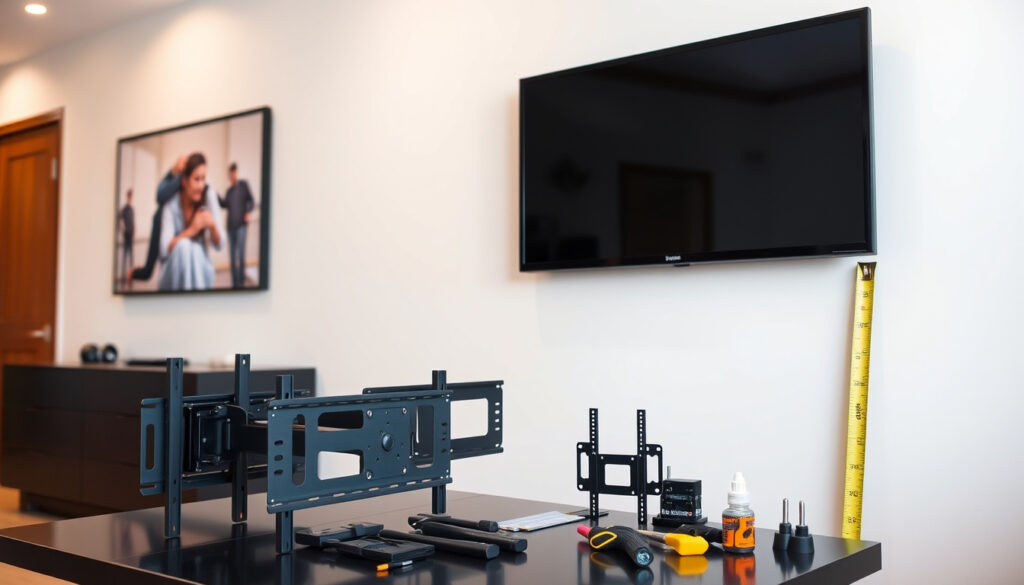
TV Mounts Buying Guide Ireland: Types, Sizes & Installation Tips
You’ve just brought home a new TV, and now you’re staring at the wall wondering how to get it up without drilling into a pipe or watching it crash to the floor. In Ireland, the most common VESA pattern is 400×400 mm, and professional installation runs between €80 and €150. This guide sorts through the bracket types, VESA compatibility, and installation steps so you can mount with confidence – whether you’re in a Dublin apartment or a Cork cottage.
TV sizes supported: 32–75 inches ·
Weight capacity range: 20–60 kg ·
Common VESA patterns: 200×200, 400×400, 600×400 ·
Number of bracket types: 3 (fixed, tilting, full motion) ·
Average price range: €20–€150
Quick snapshot
- VESA is an industry standard for mounting hole patterns (Currys Ireland (tech retailer))
- Most TV brackets support multiple VESA sizes (DID.ie (Irish retailer))
- Weight capacity is a key safety factor (Consumer Reports (independent testing org))
- Which brand is best depends on TV size, wall type, and budget
- Whether DIY installation voids warranty – check manufacturer policy
- No significant timeline events identified for TV mounts in Ireland
- Read the full guide for installation tips and buying advice
Key specs provide a quick reference for common TV mount requirements.
| Specification | Value |
|---|---|
| Most common VESA pattern | 400×400 mm |
| Average weight capacity | 35 kg |
| Popular brands | Vogel’s, Sanus, B-Tech, Omnimount |
| Typical installation time | 30 to 90 minutes |
| Professional installation cost (Ireland) | €80 to €150 |
What are the different types of TV wall brackets?
Three main bracket designs dominate the market, each with a different trade-off between profile and flexibility. Vogel’s (TV mount manufacturer) identifies fixed, tilt, and full-motion as the core types.
Fixed mounts
- Hold the TV flush against the wall – low profile, clean look (Consumer Reports)
- No angle adjustment after installation
- Best for rooms where the TV is at eye level
Tilting mounts
- Allow vertical angle adjustment, typically 5–15° (DID.ie)
- Help reduce glare when the TV is mounted high
- Still sit close to the wall
Full motion mounts
- Extend, swivel, and tilt for maximum flexibility (Vogel’s)
- Ideal for corner mounting or rooms with multiple seating areas
- Require more wall space and deeper clearance
A full motion mount costs two to three times more than a fixed mount, but it saves you having to rearrange furniture every time someone wants to watch from the kitchen.
Choose the type that matches your room layout and viewing habits.
How do I choose the right TV wall bracket size?
Size is not about the TV’s diagonal measurement – it’s about the VESA pattern and weight. AO (UK appliance retailer) explains that the VESA dimensions tell you what bracket you need, and you can find them on the product page or in the manual.
Matching VESA pattern
- VESA dimensions are measured horizontally and vertically in millimetres (Currys Ireland)
- Common patterns: 200×200 (small TVs), 400×400 (medium), 600×400 (large)
- A VESA 800 compatible bracket fits TVs with an 800×400 mm pattern (DID.ie)
Weight capacity considerations
- Brackets typically support 20–60 kg; check the spec before buying (Consumer Reports)
- A 55-inch TV may weigh 15–25 kg, well within the range
- DID.ie advises that the bracket must be strong enough for the TV’s size and weight
TV size compatibility
- Many brackets list a TV size range (e.g., 32–75 inches) as a rough guide
- Always verify VESA and weight first – size is secondary
The pattern is clear: VESA and weight are the real specs. A 55-inch TV with a 400×400 pattern and 20 kg weight will fit almost any mid-range bracket. Ignore the “size range” if the VESA doesn’t match.
How do I install a TV wall bracket safely?
Installation is straightforward if you have the right tools and know your wall type. Currys Ireland recommends using a spirit level, checking for pipes and cables, and tightening only after confirming the bracket is straight.
Tools needed
- Stud finder (for drywall), masonry drill bits (for concrete), spirit level, socket wrench, screwdriver
- Towels to protect the TV screen when laying it face down (Currys Ireland)
Wall type assessment
- Drywall: use a stud finder and lag bolts into vertical studs – never rely on drywall alone (Consumer Reports)
- Concrete or brick: use masonry anchors and a hammer drill
- AO warns against mounting on cavity or partition walls
Step-by-step installation process
- Choose the exact TV position and test with a paper template (Currys Ireland)
- Locate studs or mark for masonry anchors
- Drill pilot holes and attach the wall plate
- Level the bracket before fully tightening
- Attach the mounting arms to the TV (with the screen face-down on towels)
- Lift the TV onto the wall plate – best done with two people (Consumer Reports)
- Secure the TV to the bracket and verify it’s locked
If you hit a pipe or cable, the repair bill could be €200 or more – far more than a professional installer charges. For Irish homes with plasterboard walls, hiring a pro is often the cheaper option.
With the right preparation, installation is straightforward and safe.
What are the best TV wall brackets available in Ireland?
Irish shoppers have a solid range of retailers and brands. DID.ie offers a wide selection for 32–75 inch TVs, while Harvey Norman stocks major brands with online ordering. Budget options are available at Powercity and Tesco Ireland.
Retailers
- DID.ie – extensive range, expert advice
- Harvey Norman – major brands like Vogel’s and Sanus
- Expert.ie – competitive prices
- Currys.ie – good for online ordering and installation guides
- Powercity and Tesco Ireland – budget-friendly options
Popular brands
- Vogel’s, Sanus, B-Tech, Omnimount – all widely available in Ireland
- Prices range from €20 for basic fixed mounts to €150 for premium full motion mounts
The catch: online retailers often have the best prices, but you miss the chance to see the bracket in person. DID.ie and Harvey Norman offer both online and in-store, giving you flexibility.
For a 55-inch TV, a mid-range tilting mount from Vogel’s (around €50–€70) beats the cheap €20 option because it includes better hardware and a smoother tilt mechanism.
Investing in a quality bracket pays off in safety and ease of use.
Should I hire a professional TV installer or DIY?
This decision depends on your wall type, tools, and confidence. Consumer Reports notes that mounting is best done with two people because large sets are hard to align alone.
Cost comparison
- DIY: cost of bracket (€20–€150) + tools if you don’t have them (€30–€50)
- Professional in Ireland: €80–€150, including cable hiding in many cases
Skill and tool requirements
- DIY requires a stud finder, spirit level, drill, and basic handyman skills
- Hiring an installer ensures proper mounting and avoids wall damage
- Professional installers from tvinstaller.ie (Irish TV installation service) handle all wall types
Safety and warranty considerations
- Some retailer warranties require professional installation – check before DIY
- If you drill into a pipe or cable, repair costs can exceed €200
Why this matters: for a typical Irish home with plasterboard walls, a professional installation at €100 is cheaper than the risk of a botched DIY job. If you have a solid concrete wall and the right tools, DIY is safe and straightforward.
Upsides
- DIY saves money on labour
- You learn the process for future mounts
- Immediate satisfaction
Downsides
- Risk of wall damage if you hit pipes or cables
- May void warranty if not done by a pro
- Heavy TVs are hard to handle alone
Weigh the costs and your comfort level before deciding.
Comparison: fixed vs tilting vs full motion
Three bracket types, one pattern: the more flexibility you want, the more you pay in cost and wall clearance.
| Feature | Fixed | Tilting | Full motion |
|---|---|---|---|
| Viewing angle adjustment | None | Vertical 5–15° | Horizontal + vertical + extension |
| Distance from wall | 2–3 cm | 3–5 cm | 5–20 cm (extendable) |
| Typical price (Ireland) | €20–€50 | €30–€80 | €60–€150 |
| Best for | Eye-level seating | High mounting, glare reduction | Corner rooms, multiple seating |
The implication: if you’re mounting above a fireplace in a Dublin sitting room, a tilting mount is the sweet spot. For a corner setup in an open-plan kitchen, full motion is worth the premium.
Spec table: typical TV mount specifications
Every bracket has a few critical numbers. Here’s what the specs mean for the three most common sizes.
| Bracket size class | VESA patterns supported | Max weight capacity | Recommended TV size |
|---|---|---|---|
| Small | 200×200, 200×100 | 20 kg | 32–43 inches |
| Medium | 400×400, 400×200 | 35 kg | 43–55 inches |
| Large | 600×400, 800×400 | 60 kg | 55–75 inches |
The trade-off: a large bracket rated for 60 kg is overkill for a 55-inch TV, but it gives you headroom if you upgrade later. Medium brackets are the most common for Irish households.
Clarity: what’s confirmed and what’s not
Confirmed facts
- VESA is an industry standard for mounting hole patterns (Currys Ireland)
- Most TV brackets support multiple VESA sizes (DID.ie)
- Weight capacity is a key safety factor (Consumer Reports)
- Installation is safer with two people (Consumer Reports)
What’s unclear
- Which brand is best depends on TV size, wall type, and budget
- Whether DIY installation voids warranty – check manufacturer policy
Use this clarity to make an informed decision.
Quotes from the industry
Many customers underestimate the importance of wall type. We always check whether it’s plasterboard, brick, or concrete before recommending a bracket.
– Professional TV Installer Ireland
Our brackets are designed for easy installation and secure holding for TVs up to 75 inches.
– DID.ie product description
For Irish homeowners, the choice between DIY and professional installation is clear: if you have a solid concrete wall and the right tools, DIY saves €50–€100. If you’re dealing with plasterboard or want cable hiding, paying a pro at €80–€150 is a small price for peace of mind.
For a comprehensive overview of mounting options, the TV wall bracket guide details the differences between fixed, tilting, and full-motion brackets.
Frequently asked questions
Can I mount a TV on a plasterboard wall?
Yes, but you must use a stud finder to locate vertical studs and secure the bracket with lag bolts into the studs. Never rely on drywall anchors alone for a TV mount (Consumer Reports).
What is the weight limit for a TV wall bracket?
Most brackets support 20–60 kg. Check the product specification before buying – the bracket must be rated for your TV’s weight (DID.ie).
Do I need to buy screws separately?
Most brackets come with a set of screws for common VESA patterns. However, if your wall type requires special anchors (e.g., for brick or concrete), you may need to buy those separately.
How do I hide cables after mounting?
You can use a cable management kit that runs cables inside the wall (requires a hole) or a surface-mounted cable raceway. Some professional installers include cable hiding in their service.
What is the standard VESA mounting pattern?
There is no single standard – common patterns are 200×200, 400×400, and 600×400 mm. Measure the distance between the four mounting holes on your TV to find your pattern (Currys Ireland).
How long does it take to install a TV wall bracket?
A typical installation takes 30 to 90 minutes, depending on wall type and experience. Professional installers usually finish in under an hour.
Can I reuse a TV wall bracket for a different TV?
Yes, if the new TV has the same VESA pattern and is within the weight capacity. Always check compatibility before reusing.
Irish TV buyers now have the knowledge to choose and install the right mount. Whether you opt for a fixed, tilting, or full motion mount, matching VESA and weight capacity ensures a safe setup.
More related posts
 Cast Of Drop (film)
 Halloween Movies: 13-Film Order, Streaming & Trivia
 Watch Tenacious D in the Pick of Destiny: Streaming Guide
 Cast Of Sidelined: The Qb And Me
 Cast Of The Odyssey 2026
 Cast Of Twisted Metal Tv Series
 Watch The Grim Adventures of Billy and Mandy: Streaming Guide
 Cast Of My Oxford Year